• HOME
  • ABOUT US
    • Our Approach
    • Patty Taylor, PhD, Licensed Clinical Psychologist
    • Lindsey Marchant, LCSW, Licensed Clinical Social Worker
    • Michelle Boswell, LCSW, Licensed Clinical Social Worker
    • Emma Sawyer, LCSW, Licensed Clinical Social Worker
    • Melissa White, PhD, Licensed Clinical Psychologist
    • Christine Madden, LCSW, Licensed Clinical Social Worker
    • Melinda Garrard, CSW, Certified Social Worker
    • Luiza Pradera, MS, Clinical Psychology Doctoral Candidate
    • Sarah Fox, CSW, Certified Social Worker
    • Lisa Kallunki, Office Manager
  • OUR FOCUS
  • RESOURCES
    • ADHD
    • Anxiety
    • Obsessive Compulsive Disorder and Related Diagnoses
    • Autism Spectrum
    • Behavior Disorders
    • Child Sexual Abuse
    • Depression
    • Divorce and Step Parenting
    • General Functioning
    • Parenting
    • Relationships
  • OUR BLOG
  • EMPLOYMENT
  • INSURANCE
  • CONTACT US

CHATS Utah

Child, Adolescent, and Adult Treatment Specialists

Accepting new clients (Select Health, DMBA, EMI, Self-Pay, etc.). Now offering the evidence-based practices of Inference Based Therapy (ICBT) as well as Exposure Response Prevention (ERP) for clients with Obsessive Compulsive Disorder (OCD), anxiety and related disorders. In-person and Telehealth options available. Please call us at 801-756-1626.

  • Facebook
  • Instagram
  • Phone
  • Pinterest
  • RSS
  • HOME
  • ABOUT US
    • Our Approach
    • Patty Taylor, PhD, Licensed Clinical Psychologist
    • Lindsey Marchant, LCSW, Licensed Clinical Social Worker
    • Michelle Boswell, LCSW, Licensed Clinical Social Worker
    • Emma Sawyer, LCSW, Licensed Clinical Social Worker
    • Melissa White, PhD, Licensed Clinical Psychologist
    • Christine Madden, LCSW, Licensed Clinical Social Worker
    • Melinda Garrard, CSW, Certified Social Worker
    • Luiza Pradera, MS, Clinical Psychology Doctoral Candidate
    • Sarah Fox, CSW, Certified Social Worker
    • Lisa Kallunki, Office Manager
  • OUR FOCUS
  • RESOURCES
    • ADHD
    • Anxiety
    • Obsessive Compulsive Disorder and Related Diagnoses
    • Autism Spectrum
    • Behavior Disorders
    • Child Sexual Abuse
    • Depression
    • Divorce and Step Parenting
    • General Functioning
    • Parenting
    • Relationships
  • OUR BLOG
  • EMPLOYMENT
  • INSURANCE
  • CONTACT US

Shrink-Rap: OCD in Children and Teenagers

October 16, 2017

I feel fortunate to have been able to recently attend the 24th annual International OCD Foundation conference in San Francisco, California. This conference gives treating professionals (such as psychologists) as well as children, teens and adults who struggle with OCD, the most up-to date information on effective and evidenced-based treatments for OCD and other anxiety disorders.

Pediatric obsessive compulsive disorder is a fairly common neuropsychiatric condition that can cause significant problems for children and teens, as well as their parents and families in many areas of their life. According to an OCD-fact sheet included in this article, 1 in 200 children have obsessive compulsive disorder. As noted on this sheet, this would look like 4-5 children in an average elementary school and 20 teenagers in a large high-school. Recent research, included in an article by *Marien, Storch, Geffken and Murphy (2013), indicates a 1.3-4% prevalence rate of OCD among children and adolescents.

There are many misconceptions about obsessive-compulsive disorder. Some people state “I am so OCD”, or “you are so OCD” meaning that the individual is overly organized and/or somewhat rigid. These statements miss the truth and reality of what OCD is and how it effects those who really suffer from it.

OCD is usually considered an anxiety disorder with two components: obsessions and compulsions.

Obsessions are unwanted, intrusive and repetitive thought, images or impulses that result in intense anxiety, and/or distress.

Compulsions are actions that are meant to decrease the above noted anxiety. They are generally repeated behaviors and/or mental actions.

For example a child or adolescent may have repetitive and intrusive thoughts about germs…germs causing death to himself/herself and/or his/her loved ones. This may lead to excessive washing to rid the self of germs, and or avoidance of places and items which the child/teen may feel are more likely to be contaminated with germs. Marni L. Jacobs (**Chapter 4-Recognizing Obsessive Compulsive Disorder, in Understanding OCD a guide for parents and professionals, Lewin and Storch 2017) identifies several themes that are present in pediatric OCD. These include: Aggressive obsessions, Checking behaviors, Contamination concerns, Counting symptoms, “Just right” obsessions and need for symmetry or exactness, Ordering/organizing/arranging symptoms, Religious obsessions/scrupulosity, Repeating rituals, Sexual obsessions, Somatic obsessions and Magical thinking/superstitious fears. Though there can be variations in the intensity of the thoughts and obsessions, the thoughts and obsessions tend to interfere with functioning in home, social and school environments. Avoidance of anxiety is typically also involved in the maintenance of OCD symptoms.

Parents and family members of those with OCD may feel confused and at a loss of how to help their child/teen with OCD. In an effort to help their child or teen they may become involved in the obsessions and/or compulsions of their child/adolescent. The conference I attended discussed the hopefulness of treatment for those who suffer. **Storch and Lewin (2017) state, “Two types of effective treatment have been established. These include a form of psychotherapy called cognitive behavioral therapy (CBT) with exposure and response prevention (ERP) as well as a group of medicines called serotonin reuptake inhibitors (SRI’s).” (**Understanding OCD: A guide for parents and professionals, Lewin and Storch, 2017). Lewin and Storch’s book is a great resource for parents who have questions about treatment(s) they may be considering for their child or teen.

CBT/ERP is a specific treatment that includes helping the child or teen slowly go toward their anxiety in a hierarchical fashion and with skills and support. It includes practice in not engaging in their compulsive behavior(s). Children and teenagers are also taught how to accept their anxiety provoking thoughts, label and/or externalize them, talk back to them, and not act on them in the same way. Generally the parent(s) are included in this treatment. They are taught how to best help, which may be different than how they previously responded, in order for their child/teen to improve and better manage their anxiety and symptoms. For example, a trained therapist can help a parent(s) who has become a part of a ritual, slowly disengage from this role. Also, because it is sometimes difficult for a child/teen to engage in CBT/ERP a psychologist/therapist may at times help the parents develop a behavioral reward system for home-based exposure practice. A treatment provider who is trained in CBT and ERP can be helpful to the child/teen and the family. There are also treatment programs (inpatient and intensive outpatient) that utilize CBT/ERP.

On a separate note, as part of the IOCD conference I was able to watch the premier of an amazing movie called “Unstuck: An OCD Movie”. It followed the lives and treatment of brave young people with various types of OCD. It offered a window into the struggles, the treatment and the hope in recovery for children and teens with OCD. The film demonstrated the individuality as well as some common bonds of those with this struggle. Additionally, I loved that the youth were able to address the myths of how people in the general population see OCD and talk instead of what OCD really looks like and feels like. It also demonstrated how CBT/ERP helped with positive functioning.

For your information I have included the (1)***OCD Fact Sheet that can be found on the IOCD website, (2) Two trailers for “Unstuck: An OCD Movie”, and (3)*** A link for the IOCD website, iocdf.org, for more information about Obsessive Compulsive Disorder.

*Intensive Family-Based Cognitive-Behavioral Therapy for Pediatric Obsessive-Compulsive Disorder: Applications for Treatment of Medication Partial-or Nonresponders. Marien, Storch, Geffken and Murphy

Click here to view the book “Understanding OCD A Guide For Parents and Professionals” (Edited by Adam B. Lewin and Eric A. Storch).

Click here to visit the iocdf.org website

Click here to download the “OCD in Children and Teenagers” Fact Sheet

Filed Under: Blog

Shrink-Rap: Value-Setting for the New Year

December 31, 2016


The new year is often a time where we reflect on the past and take time to set goals for the future. I grew up setting goals at the new year and still do, every year. There’s a sense of accomplishment and excitement that comes with predicting the successes and growth that one will obtain in the upcoming year. In this sense, goals are defined as the end-result of a person’s endeavor. However, at the beginning of this new year, I have found myself contemplating the importance of values. Harris describes values as “your hearts deepest desires for how you want to behave as a human being.” Values are continuous and ever-present, while goals are accomplished and final. When I think of the difference between values and goals, I often imagine a journey to a destination, such as a hike. The end view on the peak is the goal -it’s a destination or end-result. I then think of values as the direction I am headed, or the trail that I am on. You can be heading East daily. East is not a destination but it is a metric that we use to consistently modify our path. Some examples of values are compassion, good work ethic, social relations, spirituality, physical health, learning and more. Goals might then be obtaining a service position, getting a promotion, making a new friend, finishing a spiritual book, competing in a triathlon, completing a class, etc.

Why do we set goals? Because we want that feeling of self-improvement, accomplishment and happiness. However, I’m sure none of us would argue that the real leg-work in accomplishing goals comes when we are day-in and day-out making consistent efforts towards said goals. It turns out, happiness and fulfillment comes from that same leg-work that most of us find not so exciting about the upcoming year. In other words, it is common for us, as humans, to want the prize without the effort; while all the while, it is the effort that actually provides those feelings of self-improvement, accomplishment and happiness (the feelings that we mistakenly think come from the end-result of attaining our goals).

There is a strong body of literature that supports this values approach. Research conducted by Whippman (2016) concluded that value-based living is closer to producing happiness as a by-product than “pursuing happiness” as a goal. In fact, she stated that those who pursue happiness as a goal are often less happy than those who focus on strengthening relationships day-to-day, working a consistent job and other “value-based” activities. “Value-based” is another term for behaviors that we perform daily that align with our underlying values (Hayes et. al.). In the case where you value strong relationships, the “value-based” behavior would look like daily activities that align with the value, such as checking in with a friend or family member to see how they are doing, making time to spend with a relative, sitting next to a family member to read, etc.

Becoming clear on what our values are is always a great idea. It provides a gentle reminder of what path or direction it is we want to go. It reminds us, so that in moments of decision making (example: what to do with free time, what to do when faced with a dilemma, etc.) we can make decisions that ultimately provide more long-term fulfillment and happiness. It is also the key to accomplishing goals, but more importantly it is the key to being content and fulfilled while doing so. At the beginning of this new year, I figure it’s as good a time as any to remind myself of my values.

How do you find, set and live by values? There a couple of guidelines that I’ve found useful listed below.

  • Explore values. There are many values to choose from and find within yourself. Remember, “values are your hearts deepest desires for how you want to behave as a human being (Harris)” Don’t feel limited or drawn to values that seem more “correct” or valued by others (see the “Defining Your Values” attachment, where it says “A Quick Look at Your Values –page 1”). When you’ve explored adequately, choose the 4-6 values you feel most aligned with or would like to incorporate into your life. Choosing this many does not limit your values, but provides a select few to focus on.
  • Identify “value-based” behaviors. Once you’ve chosen 4-6 values, think about what behaviors would align with those values. For example, if one of your values is creativity, what are some ways you know to engage in creativity? This might be writing, art, playing instruments, taking a walk and finding images or meaning in your surroundings, etc.
  • Openly/non-judgmentally think of things that get in the way of the behaviors just identified. This step, if done with the purpose of understanding yourself better, can help problem solve for future instances where you might not feel motivated and important values seem to take the “back seat” to less important values (example: creativity taking the “back seat” to fitness).

Making goals and not achieving them or acting in ways that we regret is never enjoyable. Through research, professional experience with clients and personal experience, I have learned that exploring and introducing a more value-based life is best done with honesty towards ourselves and a nonjudgmental exploration of what it is that we each truly value (Neff & Dahm). Readdressing and revisiting our values is not just a great idea at the New Year, but whenever we would like to improve and realign our life with what we truly want.

This article was written by Tess Collett, CSW and Ph.D. in Training. Tess has been working at CHATS since June 2016.

Sources:

Fletcher, L., & Hayes, S. C. (2005). Relational Frame Theory, Acceptance and Commitment Therapy, and a functional analytic definition of mindfulness. Journal of Rational Emotive and Cognitive Behavioral Therapy

Harris, R. (2010). The confidence gap: A guide to overcoming fear and self-doubt. Penguin Group Australia. Boston, Massachusetts.

Hayes, S. C., Luoma, J. B., Bond, F. W., Masuda, A. & Lillis, J. (2005). Acceptance and commitment therapy: Model, process and outcomes. Behavior Research and Therapy 44, p 1-24.

Layous, K., Lyubomirsky, S. (in press). University of California, The How, Why, What, When, and Who of Happiness: Mechanisms Underlying the Success of Positive Activity Interventions

Neff, K. D., & Dahm, K. A. (2012) Self-Compassion: What it is, what it does, and how it relates to mindfulness. University of Texas at Austin, appear in in M. Robinson, B. Meier & B. Ostafin (Eds.) Mindfulness and Self-Regulation. New York: Springer

Suttie, J. (2016) Is the search for happiness making us anxious? Retrieved from http://greatergood.berkeley.edu/article/item/is_the_search_for_happiness_making_us_anxious

Whippman, R. (2016) America the Anxious: How Our Pursuit of Happiness is Creating a Nation of Nervous Wrecks. St. Martin’s Press New York


Filed Under: Blog

Shrink-Rap: The Benefits of Giving

November 29, 2016

Although I’m not much of a winter girl, (even though I’m from Utah!) I do love the Holidays. I’m guessing the things I love about the Holidays are similar to what you may love about this time of year: lights on the houses, wreaths on the doors, trees glowing from the windows, scents of cinnamon, pine, and peppermint, Holiday tunes on the radio and in the stores, time with loved ones, watching the stillness of the first snow fall, and of course, the delicious food. Something else I enjoy are the many opportunities to give to others-family, friends, neighbors, coworkers, and strangers.
I think one of the reasons we enjoy giving to others is because it feels good. More specifically we tend to feel positive, happy, and uplifted when we give to others. Giving to and serving others has been identified by research as being a happiness habit that people can engage in to cultivate more lasting happiness and satisfaction. In one study, significant increases in happiness were reported for research participants who performed five acts of kindness one day a week for six weeks (Lyubomirksy et. al., 2005). In another study, individuals who were given a $10 gift card, but chose to use it in a way where they gave it to another person, but also spent time with the receiver felt the happiest compared to other individuals who either gave it away or used it on themselves while spending time with someone else (Dunn et. al., 2011).

Research completed by Dunn and Norton (2013) found that acts of giving are most effective or have the largest impact on our happiness when the following criteria are met: 1) the giving is a choice 2) you connect with the person(s) you’re helping 3) you see and/or learn about the impact your giving will have. Giving is a choice means that you were not pressured nor did you feel obligated to give. Creating a connection means you spent some time with the recipient(s) of the gift (e.g. giving your time to help someone move, helping your neighbor shovel their driveway, tutored children learning to read). Seeing the impact means you took some time to find out what your gift will go toward (e.g. read about how your online donation will be used, asked what the money you were donating would go toward).

There are many ways to give to others. And in case you need some help getting started, below are some ideas keeping the three criteria outlined above in mind:

1) Volunteer to teach your talents to others (e.g. sewing, crocheting, woodwork, ceramics, etc.).

2) Donate food to a food bank/homeless shelter and help serve a meal to the patrons.

3) Pay it forward in the drive-thru line.

4) Donate money to your child’s school. Ask what the money will be used for.

5) Small acts of kindness are great too! Hold the door for someone. Give up your seat on the bus/train/while waiting to be seated at a restaurant. Help a friend with a chore. Make breakfast for your partner.

Happy Holidays from all of us at CHATS!!

This article was written by Tessa Salisbury, Ph.D. Dr. Tessa has been working at CHATS since December 2015. She feels blessed and grateful to be there.

Filed Under: Blog

Shrink-Rap: Gratitude

November 16, 2016

gratitudeNovember tends to be a chilly month here in Utah. The warmer Fall days seem to be behind us. It becomes harder to get away with leaving the house without some kind of warmer wear in tow. Most of the leaves have fallen off their branches leaving the trees shivering in the cool air. Snow isn’t far off at this point. It can usually be seen staring down at us from the tops of the mountains that surround us. While we can’t do much to control or change the cold, getting colder weather, we can make this month warmer by working to cultivate and express gratitude.
Gratitude is a well researched construct and findings indicate that gratitude tends to have a positive impact on us psychologically as well as physically. On the physical health side of things research findings have shown that cultivating gratitude can reduce stress hormones such as cortisol by over 20% (McCraty et. al). More findings note that recalling feelings of appreciation and listing what one is grateful for decreases blood pressure and lowers heart rate variability (McCraty et. al; Shipon et. al). Additional research has found a relationship between gratitude and improved sleep as well as gratitude and more time spent exercising each week (Digdon et. al.; Emmons et. al).

Psychologically, gratitude has been linked to a plethora of positive research findings. More specifically, gratitude has been found to be related to higher self-esteem, lower risks for major depression, improved resiliency, and an increased likelihood of overcoming trauma (Wood et. al.; Hill et. al.). Furthermore, when we experience gratitude it is very difficult to also experience negative emotions such as envy, anger, resentment, and regret at the same time (McCullough et. al.). Therefore, we tend to experience a decrease in these negative emotions. Finally, gratitude has also been found to be related to lower aggression and higher levels of empathy (Dewall et. al).

There are many many ways to experience and express more gratitude, not just this month, but all year long. Below are just a few of the ways. I hope you can find one that you’d be willing to try.

  1. Keep a gratitude journal. Write about the things you are grateful for. They are likely to be different every day. Don’t worry so much about length. Whether it’s two minutes or 20, as we already discussed above, expressing gratitude is good for you.
  2. Write a thank you note. Whether you send it or not, the act of writing a thank you note is likely to create positive emotions that last. Think of people who have done something kind for you, big or small, and take a minute to express thanks. As a side note, taking a minute to verbally express genuine thanks in person is also a great way to experience gratitude.
  3. Dinner table gratitude. Bring your family in on the action! With your family gathered around the dinner (or breakfast or lunch) table take turns to verbally express what you are grateful for. Do this few times a week. Notice the variability in the responses. Warm, happy feelings for all!
  4. 30 Days of Gratitude. Click on this link for the 30 days of gratitude topic list: http://textmyjournal.com/gratitude-journal-prompts/ With a different prompt each day, 30 Days of Gratitude makes it easy to experience more gratitude in your life.


Sources:

Dewall, Lambert, Pond, Kashdan, & Fincham. A grateful heart is a nonviolent heart: Cross-sectional, experience sampling, longitudinal, and experimental evidene. Social Psychological and Personality Science (2012): 232-40.

Digdon & Koble. Effects of constructive worry, imagery distraction, and gratitude interventions on sleep quality: A pilot trial. Applied Psychology: Health and Well-Being: 193-206.

Emmons & McCullough. Counting blessings versus burdens: An experimental investigation of gratitude and subjective well-being in daily life. Journal of Personality and Social Psychology: 377-89.

Hill, Allemand, & Roberts. Examining the pathways between gratitude and self-rated physical health across adulthood. Personality and Individual Differences: 92-96.

Lyubomirsky. The how of happiness: A scientific approach to getting the life you want. (2008): 89-101.

McCraty, Barrios-Choplin, Rozman, Atkinson, & Watkins. The impact of a new emotional self-management program on stress, emotions, heart rate variability, DHEA and cortisol. Integrative Physiological and Behavioral Science: 151-70.

McCraty. The effects of emtions on short-term power spectrum analysis of heart rate variability. The Amerian Journal of Cardiology: 1089-093.

McCullough, Emmons, and Tsang. The grateful disposition: A conceptual and empirical topography. Journal of Personality and Social Psychology: 112-27.

Shipon. Gratitude: Effect on perspectives and blood pressure of inner-city African-American hypertensive patients. Dissertation Abstracts International: Section B: The Sciences and Engineering 68 (2007).

Wood, Froh, & Geraghty. Gratitude and well-being: A review and theoretical integration. Clinical Psycohology Review: 890-905.

Filed Under: Blog Tagged With: gratitude

Shrink Rap: Increasing Happiness Over the Summer Through Random Acts of Kindness

May 22, 2015

Small changes can have big effects.  When I was in graduate school we learned that it is through tiny changes that people are able to make bigger and more positive shifts in their lives.  

Research has shown that individuals who engage in even small acts of kindness toward others increase their own happiness.  In a study by Sonja Lyubomirsky that is cited in Sean Achor’s work, small acts of kindness such as sending a positive email increase the givers happiness significantly.  Additionally,  Sean Achor’s work purports that kindness towards others and subsequent happiness has a ripple effect. When we are kind to others, those others are kind to others and so on and so on.  We have all heard those news stories of long strings of people in fast food windows who pay for the cars behind them because others have paid for them.  I still remember working as a young sales clerk at a small store when I was very pregnant with my first child at a time when money was in short supply.  A stranger left 50 dollars  at the front desk in an envelope with my name on it with a note  that it was to help out with the new baby.  I felt such gratitude and love and felt a great desire to return the favor when possible. On our office Pinterest page I included a board labeled “Kindness”.  Feel free to visit this board for hundreds of ideas on small, doable acts of kindness. I believe kindness is an important value for both the giver and the receiver and has the potential to influence the world for good.  I love the quote, “Be the change you wish to see in the world.”  

The following video illustrates the importance of kindness as well as it’s ripple effect.  The first part discusses the importance of kindness.  Don’t miss the second half of the video where there is a lovely representation of kindness.  The subtitle on this video states, “One act of kindness can have unknown and profound consequences.”

After watching the video and considering all the kids and teenagers who will be out of school for the summer, as well as adults who may be on vacation, I thought what would be better than increasing our children and our own happiness levels by encouraging and participating in small random acts of kindness.  Here is a quick list of ideas to get you started: 

  1. Every time you open up any form of social media send a positive message/text/tweet/picture/etc. to praise or thank someone you may not routinely message.  
  2. Write a positive note to anyone who may frequently provide service for you (garbage collector, teacher, babysitter, religious advisor, waitress, food service worker, etc.)
  3. Put change/money in a candy/gum/candy/snack machine at a grocery store or place of work. 
  4. Put a positive note or dollar bill in a beloved book at the library.  
  5. Rake, weed, do yard work for an elderly neighbor. 
  6. Put change in parking meters. 
  7. Make lunches for a homeless facility (check with the facility first to find out how they would like you to do this). 
  8. Get a group together  to sing or perform at a retirement facility (call the facility first to check needs and times).
  9. go to family reunions and really communicate and get to know your cousins, aunts, uncles, grandparents and other relatives. 
  10. Take chilled bottled water and/or popsicles to a parade and give them out to thirsty or over-heated people for free (with parental permission of course).  
  11. Call someone you haven’t contacted recently.  
  12. Hold doors open for people 
  13. Let someone go ahead of you in line. 
  14. Tell your parents thank-you for something you don’t usually thank them for. 
  15. Donate clothing or toys to a thrift store. 
  16. Give a compliment
  17. Return a shopping cart for someone. 
  18. Carry around snacks, drinks in the car to give to homeless people. 
  19. Draw a picture and send it to someone. 
  20. Smile!

“When we practice loving kindness and compassion we are the first ones to profit.”Rumi

Let’s make this summer the summer of kindness and increased happiness!

Filed Under: Blog Tagged With: charity, happiness, kindness

Shrink Rap: How to Build and Strengthen Relationships

February 8, 2015

Couple Talking

I grew up in a small town in Minnesota, where I was the youngest of ten children. I first started thinking about ways to build and strengthen relationships as a way to survive being the youngest of such a large family. While we all tried to build and maintain our relationships, it was commonplace to have conflicts, as with all families and relationships. During these times my mother was always a voice of reason and kindness. She always told us that the hardest thing in life is learning to get along with others, and that we should, “Expect nothing and rejoice in everything.” Her reason for this was to help us understand that it is our expectations of what people should or should not do that often creates conflict and hurt feelings.

One way this can be overcome is by learning effective modes of communication that increase our flexibility and understanding of the other person, while helping us stay true to our own values and objectives. It also helps us learn to stop expecting others to read our minds, know how we feel, or even to know how they should fix it. Undoubtedly every relationship has its fair share of challenges. It is for this reason that a big part of building and maintaining any relationship is to learn how to effectively communicate during times of conflict, frustration, anger, or hurt feelings, in a way that helps the relationship rather than hurts it. Utilizing the following skills can do this. First, when considering how to effectively express oneself in a way that will be well received by the other party, we think about our end goal as one of the following:

1. Objective-
• Is it most important to get what you want out of the interaction?
2. Relationship-
• Is it most important to maintain, keep, or improve the relationship during the interaction?
3. Self-respect-
• Is it most important that you feel congruent with your own values and stand up for yourself in a way that increases self-respect after and during the interaction?

Then we use a set of skills specifically meant to help us either get our objective, maintain or strengthen our relationship, avoid losing self-respect, or a combination of all three.

First, the skills to help us get our objectives can be remembered by using the following acronym: DEAR MAN

• Describe – means to describe the situation using only the facts
“I noticed you borrowed my shirt without asking.”

• Express – means to express how it makes you feel
“This makes me feel frustrated because when I went to look for it I couldn’t find it.”

• Assert – means to tell what you’d like to happen or what you need
“I’d really appreciate it if you would ask to borrow my things instead of taking them without asking.”

• Reinforce – means to thank them or tell them how happy it would make you if you were to get your outcome or vice versa
“I would be really happy if next time you asked before you borrowed something.”

• Mindful – means to focus on your one objective rather than bringing up many things at once or getting off track. Stay focused on what you’d like to happen. Ignore threats, attacks, or attempts to change the subject

• Appear confident – use a confident voice tone and physical manner; make good eye contact, don’t stare at the floor or whisper.

• Negotiate – be willing to give to get. Offer and ask for alternative solutions to the problem. Turn the problem over to the other person and ask them for alternative solutions, “What do you think we should do?”

Second, the skills to maintain and strengthen a relationship can be remembered by the acronym: GIVE.

• G- Stands for Be Gentle. This means be courteous and temperate in your approach. Do not attack, threaten, or judge the other person. Do not make comments like, “If you were a good person, you would…” or “You should…” or “You shouldn’t…”

• I – Stands for Act Interested. Listen and be interested in the other person. Be patient and listen to the other person’s point of view, opinion, reasons for saying no, or reasons for making a request of you. Don’t interrupt or talk over the other person.

• V – Stands for Validate. Acknowledge and validate the other person’s feelings, wants, difficulties, and opinions about the situation. Be nonjudgmental out loud.

• E – Stands for Use an Easy Manner – use a little humor and smile! Ease the person along and use a soft shell instead of a hard shell.

Third, ways to keep respect for yourself are remembered by using the acronym: FAST.

• F – Stands for Be Fair to yourself and to the other person.

• A – Stands for No Overly Apologetic behavior. Don’t apologize for being alive, for making a request at all, for disagreeing, or having an opinion.

• S – Stands for Stick to your own values. Don’t sell out your values or integrity for reasons that aren’t important.

• T – Stands for Be Truthful and don’t lie, act helpless when you are not, or exaggerate. Don’t make up excuses.

Dr. Steve Maraboli said, “Just because your pain is understandable, doesn’t mean your behavior is acceptable.” This quote reminds us that even if the situations we are in are difficult, it does not make acts done out of revenge, anger, sadness, or emotional impulse all right. It doesn’t strengthen your relationship, your self-respect, or even help you accomplish your original objective. However, if you take a step back from the first emotional impulses that conflicts bring and use these skills, you may benefit from more lasting relationships that help you respect yourself and gain what you need.

Relationships are hard. There is no doubt about it. No matter what type of relationship you find yourself in there will be times where it is a struggle to strengthen and maintain it. However, what wonderful benefits come from putting aside differences, learning to forgive, communicating effectively, and creating lasting bonds of friendship and love. Abraham Lincoln said, “I destroy my enemies when I make them my friends.” We as humans struggle with the art of finding the right tool to be interpersonally effective and to make our perceived enemies our friends (e.g. defiant teenagers, controlling parents, emotional friends, etc), but what I’ve found is that the more skills you learn and practice, the easier it is to navigate through the battlefield of conflict and come out the other side with a team that has been strengthened through difficulty. Although improving interpersonal relationships is a life long journey, we can feel the impact of these skills immediately as a fight with a child, parent, spouse, or friend turns from heated arguments and impulsive words to conversations of understanding and shared agreements. This won’t always be the case, but when it is, it’s worth it.

My name is Tina, and I’ve been working at the Child, Adolescent, and Adult Treatment Specialists for about six months now. I have been seeing individual clients, as well as running groups to help others learn more effective social, mindfulness, interpersonal effectiveness, distress tolerance, and emotion regulation skills.

Filed Under: Blog Tagged With: building relationships, relationship, relationships, strengthen relationships

Shrink Rap: Using Gratitude to Increase Happiness

November 13, 2014

As the leaves fall from the tree outside my office and the world changes color from shades of green to shades of gold, orange and brown, my thoughts turn toward thanksgiving and gratitude (as well as toward the fast approaching Season of Giving).

“Gratitude is derived from the Latin gratia, meaning grace, graciousness, or gratefulness.  All derivations from the Latin root ‘have to do with kindness, generosity, gifts, the beauty of giving and receiving, or getting something for nothing’ (Pruyser, 1976, p.69).  As a psychological state gratitude is a felt sense of wonder, thankfulness and appreciation for life.” (Emmons and Shelton)

With the emergence of the positive psychology movement, gratitude has relatively recently come to the forefront as a psychological principle.  According to research in the positive psychology realm, gratitude can help people cope with negative life-events, help people feel generally more positive and optimistic, and increases individual sense of health and wellbeing.

The following Tedtalk, by Shawn Achor, author of “The Happiness Advantage”, is an entertaining summary of happiness research at Harvard University.  He lists the following five areas that can create lasting individual positive change:

  1. List 3 specific things you are grateful for each day for 21 days.  (Emmons and McCullough, 2003). Dr. Achor asserts that this practice rewires your brain to work more successfully and optimistically.
  2. Journal about one positive experience a day.  This allows your brain to re-live the experience. (Stratcher and Pennebaker, 2006).
  3. Exercise. This teaches your brain your behavior matters.  (Babyak, et al.  2000).
  4. Meditation.  This allows your brain to focus on the task at hand.  (Dweck, 2007).
  5. Random Acts of Kindness/Conscious acts of Kindness (Lyubominsky, 2005).

Shawn Achor states, based on research, if we do the above noted 5 activities we can alter our own levels of happiness.

Watch it on YouTube.com

The first item on Dr. Achor’s list has to do with gratitude.  It includes scanning the past 24 hours each day and noting the top three specific things that occurred that day that you are most grateful for and why.  You can write them down on anything and in any format.  It is most helpful if they are different each day, specific to that day, and include why you are grateful for that particular item or event. It might also be helpful to find a specific time each day that works for you to record the things you are grateful for.

A few examples might be, I am grateful for…

…the fresh apple cider my brother-in-law brought me from his family’s apple farm.  It was so cool and crisp and so kind of him to think of me.

…my daughter’s wrist not actually being fractured.  I am glad she will heal and not have lasting problems.

…the beautiful sunset I enjoyed with my husband as we sat on our front porch and talked.  It was so bright and colorful and I liked sharing the experience with someone I care about.

Shawn Achor concludes that as we train our brain to scan the environment for the good, it strengthens the neuro-pathways that support us looking and seeing the good in our lives. The more we practice it, the easier it becomes to find things in our lives that are positive and meaningful and that we can appreciate.

We are thankful for each other at the Child, Adolescent and Adult Treatment Specialists.  We are grateful for the support we feel and give to each other and for the beauty, strength and humanity of each of our individual clients.  We wish you the best of this season.

We hope anyone that comes across this blog will join us in this 21day gratitude challenge that helps us focus on the good and promotes a greater sense of happiness and wellbeing.

Achor, S. (2010) The Happiness Advantage: The seven principles of positive psychology that find success and performance at work.
Emmons R. A. & Crumplor, G.A. (2000)
Gratitude as human strength; Appraising the evidence. Journal of Social and Clinical Psychology, 19, 56-69.
Emmons R. A. & McCullough, M. E. (2003).
Counting blessings versus burdens: An Experimental Investigation of Gratitude and Subjective Well-being in Daily Life. Journal of Personality & Social Psychology, 84, 377-389.
Emmons R. A. & Shelton, C. M. (2002).
Gratitude & Science of Positive Psychology. In C. R. Snyder & S. J. Lopez (Eds.) Handbook of Positive Psychology (pp. 459-471), New York: Oxford University Press.
Pruyser P.W. (1976).
The minister as diagnostician; Personal problems in pastoral perspective
Philadelphia, Westminster, 1976.

Filed Under: Blog Tagged With: gratitude, happiness

Shrink Rap: Dancing With Self-Awareness

July 21, 2014

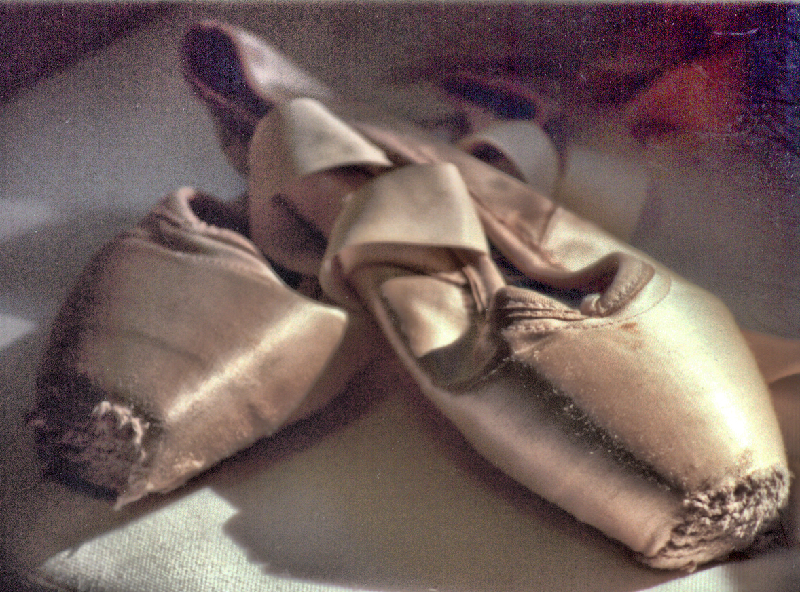
ballet shoesMy 11-year old daughter, nicknamed Bee, is passionate about dance.  She isn’t necessarily good or bad or talented or untalented at dance; she simply loves to do it.  She has taken ballet for seven years now and always begs for more intensive instruction.  Recently, at her ballet school, an audition was held for a “professional ballet track for girls ages 8 to 11. My daughter was thrilled with the news and begged to be able to “try out”.  We arrived for the audition early and I was surprised to already see a pretty long line of girls.  As she happily went into the audition room the line continued to grow longer and longer. As a mother, I began to become concerned for Bee, that her dream may not be fulfilled.  An inner battle ensued between wanting her to do well and be placed in the class, wanting her to do well and not choose to go into the class (mostly because of the time commitment), and wanting to grab her little hand and go home to avoid the competition and scrutiny. The mom sitting next to me, possibly sensing my struggle started talking to me about the benefits of ballet to both body and soul.  She discussed how much ballet had added to the lives of each one of her daughters in terms of balance, wisdom and self-awareness.  She related that she recently had discovered that in the German language there is no word for “confident”.  The closest word to “confident” in German, she said, was “Selbstbewusstsein”, which translated means “to be self aware” or “an awareness of self”.  This wise woman implied that it was more important to be self-aware than to be confident.  Knowing our purpose in our own behaviors, as well as our deeper beliefs, feelings and aspirations can help us even when faced with disappointments and possible failures. Taking risks, with an awareness of our goals and values, is important in and of itself. Coming to know our-selves, our flaws and our strengths can come from taking these healthy risks. I thought a lot about her comments. I recalled a quote by Aristotle that reads, “Knowing yourself is the beginning of all wisdom.” Crisp and Turner (2010) defined self-awareness as “a psychological state in which people are aware of their traits, feelings, and behavior”.  Alternately, it can be defined as the “realization of oneself as an individual entity”.Being self-aware means seeing clearly our own personality, reactions or responses, behavioral and relationship patterns, desires, reasons we feel think and behave in certain ways, motivations and core beliefs. I see self-awareness as a state of radical self-honesty regarding our own values, our priorities, and who we really are in both positive and negative terms.  It is our individual awareness of our self that guides us into making positive necessary changes in our own life in order to become ever closer to the person we really want to be. Self-awareness also helps us understand other people, and other people’s perceptions of us. “It is more useful to be aware of a single shortcoming in ourselves than it is to be aware of a thousand in somebody else.”  (His Holiness the 14th Dalai Lama). We can go toward self-awareness in many and various ways, including:

  • Purposeful Mindful thinking
  • Mindfulness practices
  • Journaling
  • Examining our choices
  • Determining and acting on our values
  • Being open to considering both our mistakes and our triumphs.
  • Looking and assessing consistent patterns which appear in our thoughts, feelings, behaviors and relationships.
  • Slowing down and considering the “why” in our own behaviors, thoughts and emotions.
  • Considering honestly the reasons behind potential gaps between our intentions/priorities and our behaviors.
  • Going toward healthy, growth-enhancing desires and promptings.
  • Spending time in nature and tuning into our senses.

Self-awareness is not self-consciousness.  There is some evidence that extreme private self-awareness may lead to self-consciousness, which can be positive in that such people are more aware of their thoughts and feelings and are more likely to stick to their personal values, but they also may suffer from increased stress and more anxiety (Mullen, B. & Suls, J., 1982) In my own self-awareness, I am conscious that the launching of this website and this blog feels both like an exciting new adventure and alternately like a bit of a risk to me, kind of like my daughter’s audition.  I continue to love my work and love the privacy and anonymity that my office affords. I make every effort to make my office feel safe and warm and private for each of my clients.  That will continue.  No clinical information regarding any client will ever be shared in this “internet/blog” forum.  One of my goals is that this website and blog will have the same safe, warm feeling as my office.  I hope it will.  However, I am not altogether confident with the forum of the cyber stage. Yet, Even though this stage feels slightly uncomfortable to me, like Bee, I think I will go forward and dance anyway, keeping my goals and priorities in the forefront of my mind. My colleagues and I are excited by the chance to share things that we have learned and experienced as helpful in the years we have been psychologists. I am sure we will have some small missteps along the way, but we hope to be able to give information that will be helpful, relevant, informative and entertaining.  The blog is not meant as treatment or therapy. Rather it will be stories, interesting concepts and research reviews that are focused on positive change, growth and understanding. We are going to work on updating the blog approximately once a month.  Our first series of blogs will focus on concepts around anxiety disorders. Until then, hold in mind that, “Self-awareness is an act of self-kindness”, Reuben Lowe Whatever life presents us with, it would be well for each of us to slow down and have compassion for ourselves and others, come to know, accept and work in positive ways with our true selves, and of course go toward the dance even if it feels a little uncomfortable. Crisp, R.J.  and Turner, R. N. (2010).  Essential social psychology. London: Sage Publications. Mullen, B. & Suls, J. (1982). Know thyself: Stressful life changes and the ameliorative effect of private self-consciousness.  Journal of Experimental Social Psychology. 18, 43-55.

Filed Under: Blog

  • « Previous Page
  • 1
  • 2

Questions? Please ask!

Call 801-756-1626

DISCLAIMER: The blog posts shared on www.childpsychologistutahcounty.com contain opinions of the specific mental health specialist who authored the post, and do not reflect the opinions of any organizations or affiliates.  While the therapists in this clinic are all trained professionals, all blog posts on this site are for informational purposes only, and are never a substitute for professional advice catered to your individual needs.  Neither Child & Adolescent Treatment Specialist, nor any of the contributing therapists are liable for any diagnosis, treatment plans, or decisions made based on the information presented on this website.

  • Home
  • About Us
  • Our Focus
  • Resources
  • Our Blog
  • Contact Us
  • Client Forms

Contact Us

Address:
796 E. Pacific Drive, Ste. B
American Fork, Utah 84003
Phone: 801-756-1626
Fax: 801-756-5141


Good Faith Estimates
As of January 1, 2022, all healthcare providers are required to provide estimates for the costs of your care. The Good Faith Estimate shows the cost of items and services that are reasonably expected for your healthcare needs and treatment. This will be provided by this office upon scheduling and/or as requested. This Good Faith Estimate does not include unexpected costs that could arise during treatment.

Connect With Us

Social Media Policy

Copyright © 2025 CHILD, ADOLESCENT AND ADULT TREATMENT SPECIALISTS · Social Media Policy
Utah Website Design